Views: 0 Author: Site Editor Publish Time: 2026-09-15 Origin: Site
Ordering an ultrasonic heat meter is not merely a matter of selecting a nominal pipe size. Heating utilities need a meter that represents the correct thermal boundary, works across expected flow and temperature conditions, fits the installation, communicates with the chosen data system, and can be supported throughout its operating life. A clear specification reduces late design changes and makes acceptance testing more meaningful. This guide turns common procurement questions into a practical sequence that utilities can use before releasing an order.
Define the metering purpose and circuit boundary before comparing product features.
Specify normal, minimum, and maximum operating conditions rather than relying on one design point.
Treat temperature sensors, installation, communications, and commissioning as part of the meter system.
Ask for documents, compatibility evidence, and a clear acceptance plan before ordering at scale.
The first question is simple but fundamental: what energy is the meter expected to measure? It may record energy transferred from a district network to a building substation, from a central plant to a distribution branch, or to a customer connection. The chosen boundary should match the billing, balancing, or operational responsibility that the utility needs to manage.
Draw the relevant section of the hydraulic schematic. Identify supply and return pipes, bypasses, mixing points, parallel pumps, heat exchangers, and branches. Place the flow sensor and temperature sensors so the three inputs refer to the same energy transfer. If the boundary is unclear on a drawing, it will be unclear during commissioning and disputes.
Then document the intended use of the data. Thermal energy billing needs an auditable reading method, clear units, and agreed reporting cycles. Network optimization may require more frequent interval data. Customer service may need a display and remote-access process. These needs influence the calculator, communication interface, storage, and system integration requirements.
Utilities sometimes specify a meter from maximum load alone. That can overlook the long periods when a network operates at low demand, partial load, or shoulder-season temperature conditions. Build an operating profile that includes nominal flow, likely minimum flow, maximum flow, fluid type, supply temperature range, return temperature range, expected minimum temperature differential, pressure, and ambient environment.
An ultrasonic heat meter should have a flow range appropriate to the circuit’s expected behavior. It should also be selected for the water temperature and pressure conditions at its location, not just at the central plant. A branch after a heat exchanger can have different conditions from a primary network. Where additives such as glycol are present, confirm that the proposed measurement and calculation arrangement is appropriate for that fluid and the project rules.
Low Delta T deserves direct attention. Thermal energy = mass flow x heat capacity x temperature difference x time. When the expected differential becomes small, the relative importance of temperature-sensor performance and installation rises. Include the minimum relevant differential in the procurement schedule so suppliers and evaluators are assessing the same requirement.
Procurement item | Questions to confirm before order | Why it matters |
Meter boundary | Which supply, return, and flow path are included? | Ensures the result matches the billing or operational responsibility |
Hydraulic conditions | What are the normal, minimum, and maximum flow conditions? | Supports correct meter sizing and installation planning |
Thermal conditions | What are the fluid, temperature, and minimum Delta T conditions? | Protects the thermal calculation from unsuitable assumptions |
Site environment | Is the location wet, exposed, hot, cold, or difficult to access? | Informs enclosure, installation, service, and power choices |
Data path | How will data reach the utility platform and who owns that connection? | Avoids a meter that is technically suitable but operationally isolated |
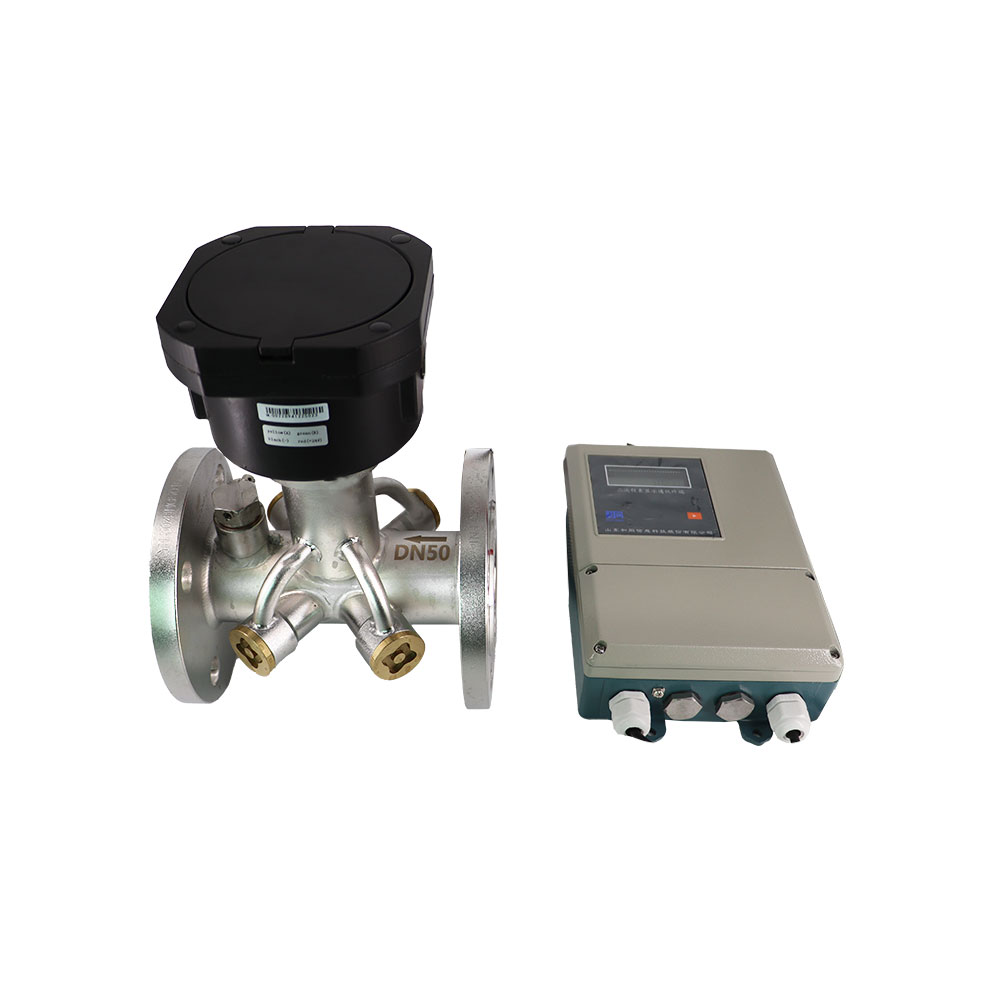
Ultrasonic measurement is attractive because it can measure flow without the routine wear associated with moving mechanical elements. That advantage should not lead utilities to consider the flow body alone. A complete heat meter assembly includes the flow measurement element, the temperature-sensor pair, the calculator, communications, seals or fittings where applicable, and the installation requirements.
Request the data sheet for the exact configuration being quoted. Check the nominal diameter, flow range, temperature range, pressure rating, environmental protection, display and configuration options, communications, and power arrangement. Ask which parts are integrated and which are separate. Confirm cable length, sensor type, mounting requirements, and whether the product is intended for heating, cooling, or combined energy applications.
For a project using the HETONG heat meter range, the utility can compare application needs with available DN15-DN40 residential HVAC, DN50-DN200 district-heating, high-temperature, and IoT-related options. The project specification should still prevail over general category descriptions; confirm the selected model’s exact technical documentation before purchase.
The installation site can determine performance as much as the model selection. Review the planned location for accessibility, orientation, clearance, drainage, isolation, pipe support, cable route, radio or network coverage, and safe service access. Confirm the direction of flow and whether the chosen section satisfies the manufacturer’s instructions for upstream and downstream conditions.
Avoid designing around a convenient but hydraulically poor location immediately beside a pump, tight elbow, valve, or mixing device. Disturbed flow can make measurement less representative. The appropriate straight-pipe arrangement depends on the selected product and local configuration, so the meter manual should be consulted rather than applying a generic rule blindly.
Temperature-sensor locations deserve equal review. They must measure the relevant supply and return conditions and should not be separated by an uncontrolled branch, bypass, or heat source. Provide the specified pockets or mounting arrangement, suitable insulation where required, and identification that prevents supply and return sensors from being swapped. A sensor that is easy to install but represents the wrong fluid condition undermines the whole energy calculation.
Remote reading can reduce manual collection and provide faster visibility, but it must be designed as a system. Begin with the existing utility architecture. Is the preferred interface wired or wireless? Is there a gateway? What protocol, addressing method, security policy, read frequency, and data format does the platform require? Who commissions the point list and verifies the first successful upload?
HETONG lists heat-meter and IoT-enabled heating solutions, and its water-meter portfolio demonstrates options such as M-Bus, RS485, cellular, LoRaWAN, and NB-IoT in related smart-metering applications. Do not infer that every heat-meter configuration has every interface. Put the required communications option explicitly in the order and check the product documentation for the selected version.
Design for outages as well as normal operation. Decide what the meter stores locally, how the system identifies a missing read, how accumulated values are reconciled after connection returns, and who receives an exception. If a site has constrained radio coverage or a deep plant room, confirm coverage during the survey rather than after hundreds of devices have been installed.
Procurement documents should identify the evidence needed for evaluation. Depending on the jurisdiction and project, this can include technical data sheets, installation instructions, communication documentation, test or calibration records, declarations of conformity, environmental information, and warranty or service terms. The utility’s own legal and metrology teams should determine the regulations and approvals that apply to the delivery location.
Be cautious with unqualified statements such as “high accuracy,” “long life,” or “maintenance free.” Ask what operating conditions, configuration, and maintenance assumptions apply. A fair evaluation compares like with like: the same application, flow range, temperature range, data needs, and support scope. Price should be considered alongside installation effort, data-system work, access requirements, and the cost of resolving problems during the service life.
For large programs, a representative pilot is often valuable. It can test the physical installation, communication, meter-reading workflow, asset registration, customer process, and data integration. A pilot should have defined pass criteria and a structured review, rather than being treated as an informal demonstration.
An order should not end at delivery. Define how each meter will be checked, installed, identified, configured, read, and accepted. The process can start with inspection of the delivered configuration and serial records. At installation, record the physical location, flow direction, sensor positions, cable routing, and initial reading. At commissioning, validate the data path and observe a meaningful operating condition.
Acceptance tests should be proportionate to the project. For some sites, a documented visual and configuration check may be appropriate. For high-value network boundaries, the utility may require additional witnessed tests, reference measurements, or integration checks. The important point is that the criteria are agreed before delivery, not invented after a discrepancy appears.
Asset data should be ready to import into the utility’s systems. Include meter identifier, customer or network location, pipe size, service type, communication address, installation date, reading units, and support contact. This information is far easier to capture when the installation team is present than to reconstruct later from photographs and memory.
Lifecycle planning includes access for inspection, battery or power management where relevant, communication support, replacement procedure, firmware or configuration control, and data continuity. A utility should know how a failed or replaced meter will be identified in the billing system and how old and new readings will be reconciled.
Create a fault-triage process. A missing reading may be caused by network coverage, power, gateway configuration, an address conflict, or the meter itself. A surprising energy total may be caused by changed operating conditions, a sensor issue, a bypass, configuration, or a data-import problem. Clear first-line checks prevent field technicians from replacing a device before the actual cause is understood.
Shandong Hetong Information Technology Co., Ltd. should be asked for the product-specific support material relevant to the chosen configuration. Utilities should retain their own records of installation, configuration, and acceptance because these are essential to maintaining customer confidence.
The best ultrasonic heat meter order begins with a clear energy boundary and ends with a defined acceptance process. Between those points, utilities should examine real hydraulic and thermal conditions, sensor installation, communication architecture, evidence of suitability, integration responsibilities, and lifecycle support. This approach turns procurement from a catalogue comparison into a controlled utility project. Hetong can provide relevant heat-meter options, but the utility’s specification should translate its network, billing, and operational requirements into a configuration that can be installed and trusted.
Provide the circuit purpose, nominal pipe size, expected flow range, fluid and temperature conditions, pressure, minimum useful Delta T, installation environment, required communication method, and intended data use.
Networks often operate at partial load. The meter should be evaluated for expected low-flow as well as high-flow conditions so that the selected range fits actual operation.
They should specify the complete temperature-measurement arrangement, including sensor type, pairing, cable or mounting needs, and the intended supply and return locations. Exact requirements depend on the selected meter and project rules.
That creates avoidable risk. At minimum, the required interface, data destination, ownership of integration, and commissioning approach should be agreed before the order is finalized.
It should prove that the physical installation, data transmission, asset registration, reading workflow, and acceptance process work under representative conditions.
Keep the selected product documentation, configuration record, serial or asset identifiers, installation photos or record, communication details, initial reading, commissioning results, and any applicable compliance evidence.