
Product Introductio
The secondary network balance control system utilizes sensing technology, big data analysis, AI algorithms, and automated control to dynamically adjust the heating network, provide heating on demand, and manage it precisely. It addresses issues such as thermal imbalance in the secondary network, high energy consumption costs, and control difficulties, supporting efficient, reliable operation and sustainable development in the energy industry.
Core Functions
Time-sharing and zoning control: Develop control strategies based on regular daily routines to achieve unattended and automatic control.
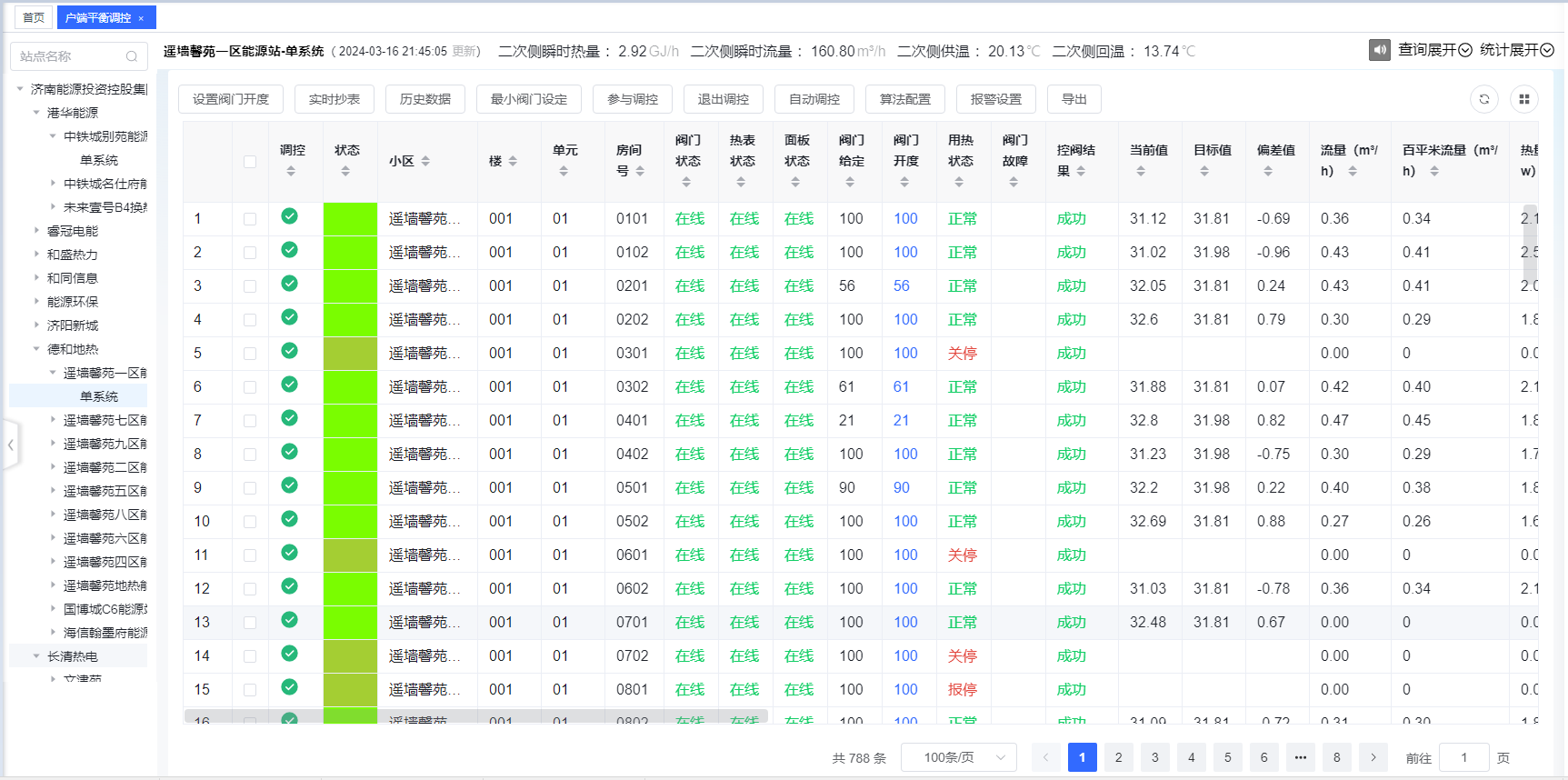
Unit balance control: Real-time monitoring and automatic balancing of branch pipeline flow or temperature to achieve supply-demand balance between buildings.
End-user balanced regulation: Focus on user heating comfort, addressing issues such as vertical imbalance at the end-user side, isolated units, and insufficient heating for corner units.
Constant temperature and pressure control: Dynamically adjust the hot water inflow and outflow in the pipeline to achieve stable pressure and temperature in the heating micro-station.
Load forecasting: Guide heat exchange station production through heat load forecasting based on the supply and demand balance of secondary network buildings and users.
Product Value
Energy Saving and Consumption Reduction: Reduce heating costs by 15%-30% through dynamic adjustment and on-demand heating.
Intelligent and Efficient: Achieve unattended control, reduce manual intervention, and increase labor efficiency by 1.5 times.
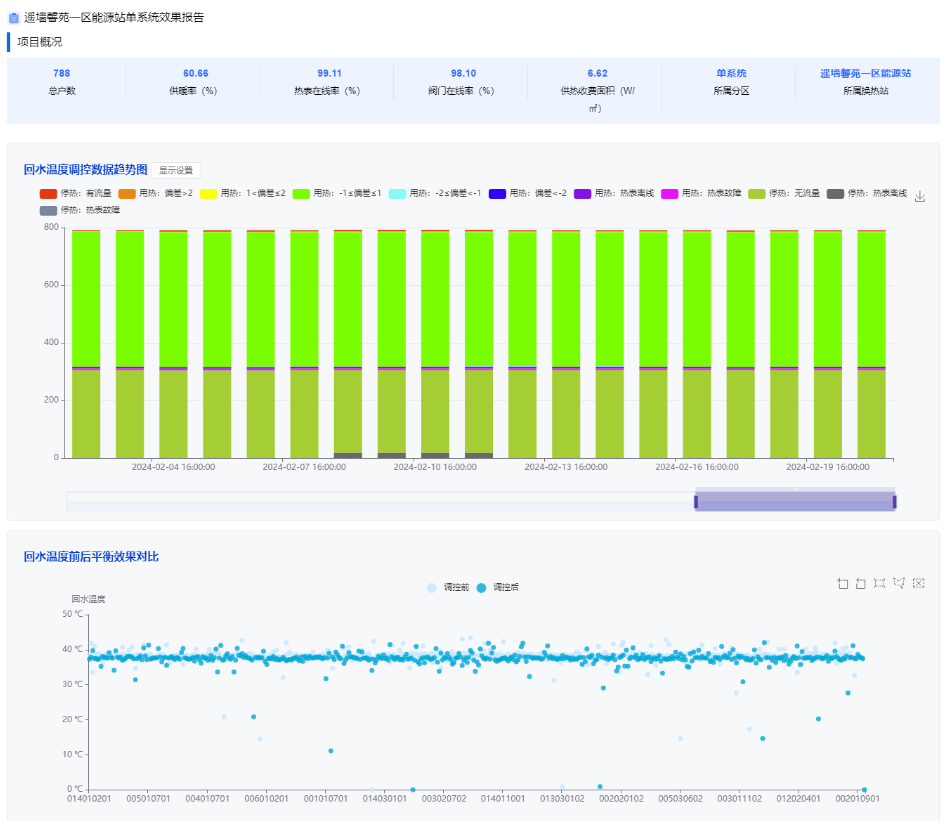
Balance Effect: Achieve a balance rate greater than 95%, temperature control accuracy of ±1 ℃ , and pressure control accuracy of ±0.01MPa.
Service Quality: Solve the problem of uneven heating and cooling at the user end, ensure user heating comfort, and reduce work order volume by more than 30%.
Safety and Stability: Dynamic optimization control to avoid pipeline network imbalance, reduce equipment wear, and extend the lifespan of the heating system.
Product Advantages
Balanced Control: Achieve thermal balance at the unit end, comfortable heating for users, and on-demand heating on the secondary side.
Fault Diagnosis: Real-time monitoring of fault signals, rapid diagnosis of fault causes, and provision of corresponding solutions and warnings.
Continuous Evolution: Algorithm models self-learn and self-iterate, with balanced regulation continuously optimized as the system operates.
Closed-Loop Control: A four-level regulation system of time-sharing zoning / unit balancing / household balancing / constant temperature and pressure, providing a full-chain balance solution from station to end.


