Views: 0 Author: Site Editor Publish Time: 2026-09-25 Origin: Site
Smart Water Solutions are not one device or one dashboard. They connect field measurement, communications, data management, and operational workflows so a utility can understand what is happening across customer connections and distribution assets. An ultrasonic water meter can be a valuable field endpoint within that system because it produces a digital flow record without relying on moving measurement components. The real improvement comes when utilities define the decisions they need to make and build a practical path from meter data to action.
Smart Water Solutions combine instruments, communications, data practices, and people rather than treating meters as stand-alone assets.
Ultrasonic water meters can support remote reading, consumption visibility, and exception detection when the full system is designed for those outcomes.
Data quality and field workflows are as important as a dashboard for turning alerts into verified utility action.
Successful programs begin with a focused operational problem, pilot it under real conditions, then scale with governance and support.
Utilities face familiar pressures: manual meter-reading effort, limited visibility between billing cycles, customer questions about consumption, difficult-to-find leaks, aging assets, and the need to use field teams efficiently. Smart Water Solutions should address a specific process rather than adding technology for its own sake.
For example, a utility may start with remote reading for a group of hard-to-access accounts. The immediate objective is to reduce missed reads and provide a more timely consumption record. Another utility may start with district metering and pressure data to investigate apparent losses in a defined area. A property-oriented water provider may prioritize tenant or resident portals and faster response to abnormal continuous use. These programs need different devices, data intervals, integrations, and success measures.
Write the use case in operational terms. State who receives the information, what constitutes an exception, how quickly it must be reviewed, what evidence a field technician needs, and how the resolution will be recorded. This short exercise prevents an expensive system from becoming a passive collection of charts.
Building block | Role in the utility process | Example question it should answer |
Measurement endpoint | Records flow, consumption, and available status information | How much water passed this customer or district boundary? |
Communications layer | Transfers data at the required interval | Did the utility receive the expected reading reliably? |
Data platform | Stores, validates, and organizes readings | Which values are actual, delayed, estimated, or questionable? |
Analytics and rules | Identifies patterns that need attention | Which accounts show continuous use or unusual change? |
Field workflow | Turns an alert into an inspected and resolved event | Who verifies the issue and records the outcome? |
Customer and business integration | Connects verified data to billing and service processes | How is a valid reading explained to the customer? |
These components need defined interfaces. A meter may transmit a reading successfully, but the value remains operationally weak if it is not matched to the correct account, timestamp, unit, and physical location. Likewise, a sophisticated alert is ineffective if no team owns the response. Smart water management is a chain; every link should be designed and tested.
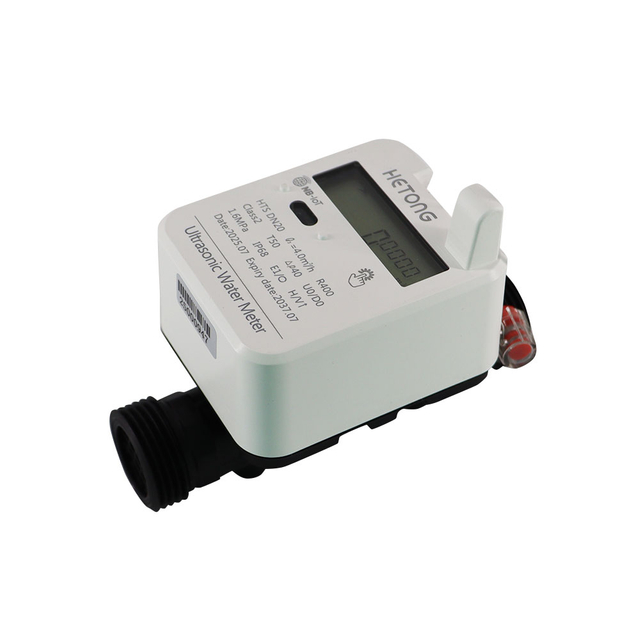
An ultrasonic water meter determines flow using acoustic measurement principles rather than a mechanical register driven by moving parts. This can be well suited to applications seeking digital measurement, low-flow sensitivity, and integration with remote reading, subject to the selected model and installation conditions. Its value within Smart Water Solutions is the ability to provide a time-stamped consumption signal that can be compared with historical patterns, billing expectations, pressure data, or neighboring areas.
HETONG offers ultrasonic and IoT water-meter products spanning residential, commercial, industrial, and municipal scenarios. Its product information describes options for multiple communications approaches and applications ranging from customer metering to smart-water networks. A utility should confirm the exact model, pipe size, flow range, environmental rating, data outputs, and protocol for its deployment rather than applying a broad product-page claim to every installation.
When the endpoint and data system are aligned, an ultrasonic water meter can contribute more than a monthly total. It can support consumption profiles, missed-read alerts, abnormal-use review, and better records for customer conversations. It cannot, on its own, prove a leak, fraud, or operational fault. Those conclusions require a defined analytical rule and verification.
Remote meter reading is often the practical first step in a smart-water program. It can reduce repeated site visits, improve reading timeliness, and give teams earlier notice of communications exceptions. The design must balance reporting frequency with battery, network, platform, and operational needs.
Map the reading lifecycle. The meter records a value, sends it through a communications path, the platform validates it, and the customer-information or billing system receives an approved value. Define what happens if any step fails. Is the source value stored locally? When is an alert raised? Can the platform distinguish a late read from a missing read? How does the billing system identify an estimate versus an actual read?
Use controlled pilots to test the full lifecycle. Select representative locations: strong and weak coverage areas, indoor and outdoor meter boxes, different building types, and sites with varying access conditions. Record installation time, first-read success, data completeness, and field exceptions. The purpose is not to claim universal results from a small sample, but to discover the adjustments needed before scale creates a larger operational burden.
Meter data can reveal patterns worthy of review. Continuous flow during a period that normally has no use may indicate a possible leak, a process load, irrigation, a fixture issue, or a changed occupancy pattern. A sudden drop in consumption may indicate vacancy, a supply interruption, a closed valve, an installation change, or a data issue. The alert is a prompt for investigation, not a final diagnosis.
Set rules that reflect the service type. A residential account and a hospital cannot use the same definition of abnormal overnight flow. Start with simple, understandable criteria and adjust them after field feedback. Record the investigation outcome so the utility can measure the rule’s usefulness. If too many alerts are normal operations, refine the threshold or add context. If important events are missed, review interval frequency, data delay, and the logic.
District-level analysis follows the same principle. Compare water entering a defined zone with legitimate, verified customer consumption over an aligned period, while accounting for known operational factors. Differences may point to apparent losses, real losses, meter issues, timing mismatches, or boundary errors. Field pressure and acoustic tools may be required to locate a suspected leak; consumption data helps prioritize where to look.
Smart Water Solutions should improve the technician’s starting information. A work order for a communications exception can include the asset location, last successful read, status indicators, communication method, installation notes, and the reason for the alert. A customer-service case can include the recent consumption trend, relevant read types, and documented meter boundary.
This information reduces unnecessary repeat visits and helps teams bring the right tools. It also supports safer planning for difficult locations such as vaults, roadside assets, and industrial sites. The technology should not remove field judgment. It should give technicians better context before they arrive and a reliable way to record what they found.
Create closed-loop workflows. When a technician confirms a leak, repair, meter replacement, blocked access, or network issue, the platform should record the outcome and update the relevant asset or customer record. That feedback improves future analytics and stops the same alert from generating repeated work after it has been resolved.
Water data is operationally and commercially sensitive. Establish who can view, change, approve, and export readings. Keep a traceable record of actual values, estimates, corrections, and meter replacements. Protect communications credentials and follow applicable privacy, security, and local regulatory requirements.
Customer trust grows when the utility can explain a reading clearly. A portal or statement should show the period, unit, reading type, and a practical way to ask a question. If the utility issues a high-use notification, phrase it as an observation and suggested next step, not an accusation. The account may have a legitimate cause, and a respectful message increases the chance that the customer will investigate promptly.
Plan for exceptions. Network outages, battery service, device replacement, construction damage, and address changes are normal operational events over a long deployment. Data governance should describe how identifiers, history, and billing continuity are maintained through each event.
After a pilot, decide whether to scale based on measured operational outcomes. These might include reading completeness, time spent on manual reads, response time for exceptions, verified leak investigations, customer-service resolution, or data availability for planning. Avoid relying on a single headline metric. A program that increases data volume but overwhelms staff with unprioritized alerts has not yet improved the process.
Standardize asset naming, installation records, configuration templates, acceptance checks, and support responsibilities before adding large volumes of devices. Train customer-service and field teams, not only the technical project team. Document which changes require approval and how firmware, keys, gateway settings, or communication contracts are controlled.
Shandong Hetong Information Technology Co., Ltd. can be considered for relevant endpoint hardware and smart-metering applications. The utility still owns the system design: coverage validation, platform integration, data governance, customer communication, and field response. A successful deployment recognizes that these responsibilities are inseparable.
Long-term value also depends on maintainable interfaces. Record the authoritative source for each data field, the owner of API or gateway changes, and the procedure for testing a change before it reaches billing or customer communication. Avoid creating reports that only one external integrator can explain. Utilities should retain plain-language data dictionaries, configuration backups, and a way to export their own historical records. These practices do not make a deployment less innovative; they make it safer to operate through staff changes, upgrades, and supplier transitions.
Smart Water Solutions improve utility processes when they connect reliable field measurement to a decision and a response. An ultrasonic water meter is an important source of digital consumption data, but the value comes from the whole operating model: appropriate communication, validated data, focused analytics, equipped field teams, and transparent customer processes. Begin with a clear use case, pilot the end-to-end workflow, and scale only after the data and people can turn alerts into verified action. That is how smart water management becomes a practical utility capability rather than a technology showcase.
They are connected systems that combine meters and other field sensors, communications, data platforms, analytics, and operational workflows to improve how water utilities read, understand, and act on information.
It can provide a digital, time-stamped flow and consumption record for a defined point. With an appropriate communications and data system, that record supports remote reading and exception investigation.
No. It can identify unusual patterns that merit review, but a verified diagnosis may require customer confirmation, field inspection, pressure information, or specialist leak-location methods.
Pilot the installation method, network coverage, first-read process, data validation, billing or customer-system integration, alert workflow, and field response under representative site conditions.
They distinguish actual, delayed, estimated, missing, or questionable readings. That helps staff avoid treating every value as equally reliable and keeps billing and analysis traceable.
No. It helps technicians prioritize and prepare work. Field inspection, repair, verification, and customer service remain essential parts of a reliable water-utility process.