
Views: 0 Author: Site Editor Publish Time: 2025-10-30 Origin: Site
Ultrasonic water meters represent a cutting-edge technology for measuring water flow with remarkable accuracy and reliability. Unlike traditional mechanical meters, these devices utilize sound waves to gauge flow rates, eliminating the need for moving parts and reducing maintenance requirements. By sending ultrasonic pulses through water and analyzing the time it takes for these signals to travel upstream and downstream, ultrasonic water meters can precisely calculate flow velocity. This innovative approach not only enhances measurement accuracy but also allows for adaptability across various water qualities, making them ideal for applications ranging from agricultural irrigation to smart city infrastructure.
Ultrasonic water meters measure flow by sending sound waves through water and analyzing how fast they travel. When ultrasonic waves move downstream, along the flow, they travel faster. When they move upstream, against the flow, they slow down. This difference in travel time helps calculate the velocity of water inside the pipe.
The heart of the ultrasonic water meter is the ultrasonic transducer. It acts both as a transmitter and a receiver of ultrasonic pulses. One transducer sends an ultrasonic signal through the water, which bounces off the opposite pipe wall and is picked up by another transducer. These pulses travel in a V-shaped path inside the pipe.
The transducers take turns sending and receiving pulses upstream and downstream. A high-precision timer measures the time it takes for the pulses to travel in both directions. This timing is crucial for accurate flow calculations.
The key measurement is the time difference between the upstream and downstream ultrasonic pulses. This difference is called ΔT. When water is still, the pulse travel time is T0. When water flows, the downstream pulse arrives sooner than T0, and the upstream pulse takes longer.
Using the pipe’s inner diameter (D), the angle of the ultrasonic beam (θ), and the measured times, the meter calculates the flow velocity. Multiplying this velocity by the pipe’s cross-sectional area gives the volume flow rate.
This method requires no moving parts inside the meter, reducing wear and tear. It also avoids flow obstruction, making it highly reliable and accurate even at low flow rates.
Proper alignment of ultrasonic transducers and accurate timing measurements are essential for precise flow calculations in ultrasonic water meters.
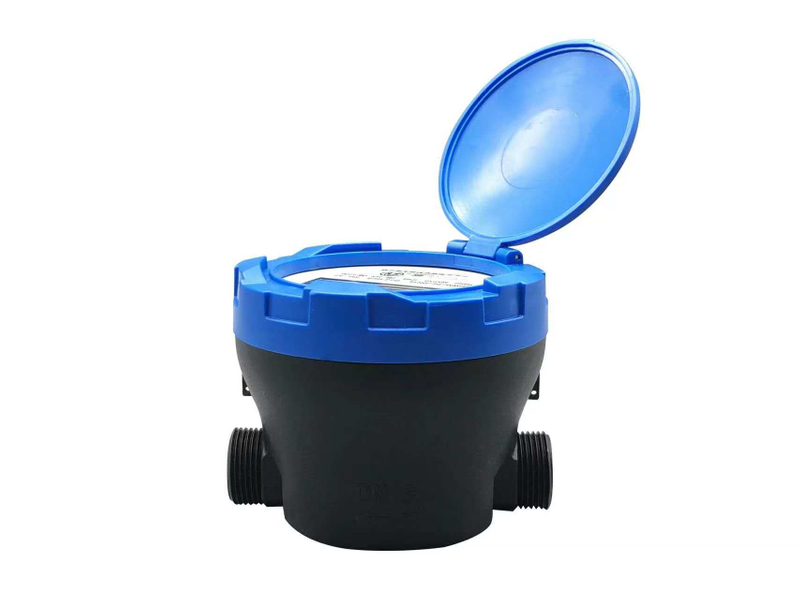
Ultrasonic water meters deliver precise measurements thanks to their advanced technology. They detect the time difference of ultrasonic pulses traveling upstream and downstream, which accurately reflects water flow velocity. Unlike mechanical meters, they have no moving parts, reducing errors caused by wear or blockage. This results in consistent, reliable readings even at very low flow rates. Their wide measurement range allows them to handle both small and large flows without losing accuracy, making them ideal for diverse water management needs.
Without mechanical components inside, ultrasonic water meters experience less wear and tear. This design minimizes maintenance requirements and extends the meter’s lifespan. The absence of flow-obstructing parts also means less pressure loss in the system, which benefits overall water distribution efficiency. Many ultrasonic meters come with robust, waterproof housings rated up to IP68, allowing them to operate reliably in harsh environments, including outdoor or agricultural settings. This durability ensures long-term performance and lower replacement costs.
Ultrasonic water meters work well across a wide range of water qualities. They are not affected by suspended particles, sediment, or impurities that often disrupt traditional mechanical meters. This makes them suitable for challenging environments such as agricultural irrigation, where water may contain debris or be of lower quality. Their stable operation in diverse conditions helps maintain accurate water measurement regardless of the water’s composition or temperature. Additionally, their compatibility with modern communication networks supports smart water management systems.
Selecting an ultrasonic water meter with appropriate protection ratings and communication features ensures optimal performance in specific environments and applications.
Ultrasonic water meters are ideal for agricultural irrigation. Farms often face tough conditions—water may carry dirt, sediments, or other impurities. These meters have no moving parts, so they avoid clogging or damage from debris. Their IP68 waterproof rating means they withstand wet, muddy environments without failing. Plus, they cause almost no pressure loss, helping pumps work efficiently. Large-diameter ultrasonic meters handle big irrigation pipes well, measuring flow accurately even when water quality is low. This helps farmers distribute water fairly and conserve resources.
Smart cities rely on data and automation to improve services. Ultrasonic water meters fit perfectly here. They provide precise flow data without blocking pipes or causing pressure drops. Their built-in communication features allow remote monitoring and control. Cities can track water use in real time, detect leaks early, and manage supply better. Battery-powered models last long with minimal maintenance, reducing costs. These meters support energy savings by lowering pump workload and help cities meet sustainability goals.
Ultrasonic water meters serve both urban and rural water systems well. They adapt to a variety of water qualities, from clean city water to less treated rural supplies. Their multiple output signals integrate easily with automated billing and management systems. This supports centralized water resource control, improving efficiency and reducing operational costs. Remote reading capabilities minimize manual meter reading, saving labor and reducing errors. Their accuracy ensures fair billing and helps manage water demand effectively.
When selecting ultrasonic water meters for your project, consider the specific environment and water quality to choose models with appropriate protection ratings and communication options for seamless integration and long-term reliability.
Ultrasonic water meters come in various designs tailored for different uses and environments. Two popular types are the GUF140 Sandwich-Type and the GUF142 Two-Channel Type. Each has features that make it suitable for specific applications.
The GUF140 is a compact ultrasonic water meter, often called the sandwich-type because of its slim profile. It measures only about 2 inches thick, saving valuable installation space. This design fits easily into tight spots without disrupting the pipe system.
● Primary Use: Mainly for agricultural irrigation, garden management, and water resource monitoring.
● Advantages:Nearly zero pressure loss during water flow, which helps maintain pump efficiency.
○ IP68 protection rating ensures it works reliably in harsh, wet, or muddy environments.
○ No moving parts inside, meaning less maintenance and longer service life.
● Installation: Its slim design allows for easy installation directly into pipelines, making it ideal where space is limited.
This meter’s robust protection and compact size make it perfect for outdoor agricultural use, where water quality and conditions can vary widely.
The GUF142 uses advanced transit-time ultrasonic technology with two measurement channels. It provides highly stable and reliable flow readings even in challenging conditions.
● Primary Use: Suitable for applications requiring precise measurement over a wide flow range.
● Advantages:Low power consumption extends battery life, reducing maintenance.
○ Wide measuring range ratio allows accurate readings from very low to high flows.
○ IP68 rating protects internal components from water and dust ingress.
● Technology: The two channels improve measurement accuracy by compensating for flow profile changes inside the pipe.
This meter fits well in smart city infrastructure and urban water supply systems where accuracy, reliability, and long-term operation are critical.
When selecting between GUF140 and GUF142 ultrasonic water meters, consider your installation space, flow range needs, and environmental conditions to ensure optimal performance.
Both ultrasonic flow meters and ultrasonic water meters use the same core technology: ultrasonic waves to measure fluid velocity. They send sound pulses upstream and downstream through the fluid and calculate flow based on the difference in transit times. This transit-time principle provides high accuracy and eliminates the need for moving parts, reducing wear and maintenance. Both types feature ultrasonic transducers that act as transmitters and receivers of sound waves, and they rely on precise timing to detect flow velocity. Additionally, both meters offer wide measurement ranges and can handle low flow rates effectively.
The main difference lies in their intended use. Ultrasonic water meters are designed specifically for measuring water flow. They are optimized for water’s physical properties and often include features tailored for water supply systems, irrigation, and urban water management. In contrast, ultrasonic flow meters have broader applications. They measure various fluids including chemicals, petroleum products, and industrial liquids besides water. Their versatility makes them suitable for industrial process control, chemical plants, and other sectors where fluid types vary.
Ultrasonic water meters usually focus on residential, agricultural, and municipal water systems. They often include communication functions for remote reading and integration into smart water networks. Ultrasonic flow meters may have more advanced options for handling different fluid densities, viscosities, and temperatures, adapting to complex industrial environments.
Ultrasonic Water Meters:
● Tailored for water measurement, ensuring optimized accuracy.
● Built-in communication interfaces for smart city and utility integration.
● Typically compact and easy to install in water distribution systems.
● Designed to resist water impurities and sediment without loss of accuracy.
● Often waterproof and rugged, suitable for outdoor or harsh environments.
Ultrasonic Flow Meters:
● Versatile across many fluid types beyond water.
● Can handle aggressive chemicals, oils, and industrial fluids.
● Available in various configurations (inline, clamp-on, open channel).
● Advanced features to compensate for fluid property changes.
● Used in broader industrial and process control applications.
When choosing between ultrasonic flow meters and ultrasonic water meters, consider the fluid type and application environment to select the most suitable technology for accurate, reliable measurements.
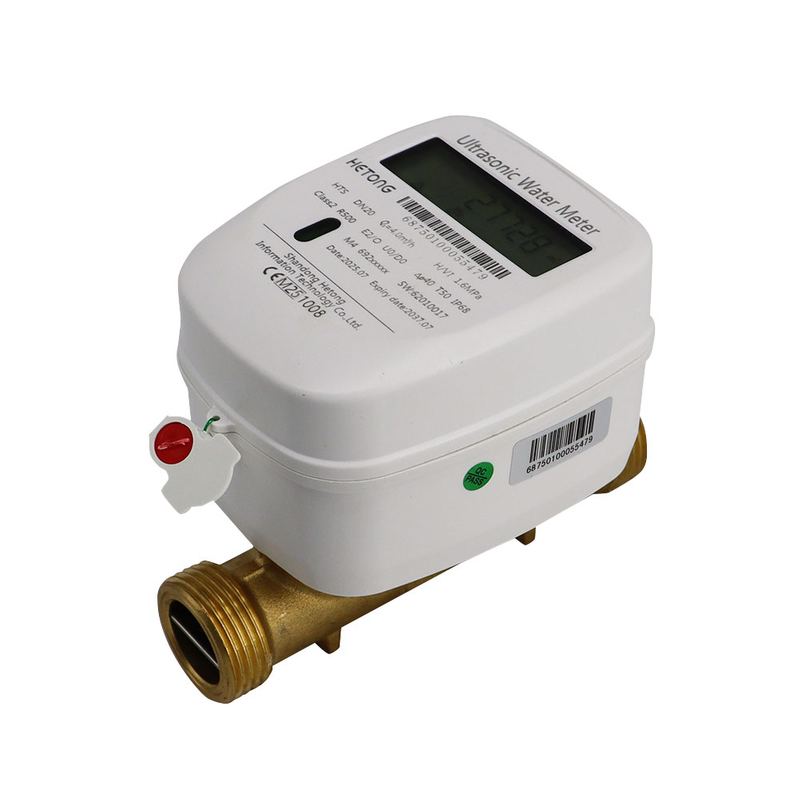
Ultrasonic water meters offer great flexibility in installation. Unlike traditional mechanical meters, they don’t require a specific orientation. You can mount them horizontally, vertically, or even at an angle. This flexibility comes from their lack of moving parts, which means gravity or positioning won’t affect their readings.
They fit easily into tight spaces, especially compact models like the GUF140 sandwich-type, which measures only about 2 inches thick. This slim profile allows installation in narrow pipe sections or confined areas without disrupting the flow. Some models can be installed directly into the pipeline, while others may clamp on or fit between flanges, depending on the system design.
Choosing the right spot for an ultrasonic water meter is crucial for accurate readings and long-term reliability. Several factors come into play:
● Flow Profile: The meter should be installed where the water flow is stable and fully developed, typically a straight pipe section. Avoid locations near bends, valves, or pumps that cause turbulence.
● Accessibility: Place the meter where it can be easily accessed for inspection, maintenance, or replacement. This saves time and reduces downtime.
● Environmental Protection: Consider exposure to extreme temperatures, moisture, or physical damage. Many ultrasonic meters have IP68 ratings, meaning they resist dust and water ingress, so they can be installed outdoors or in wet environments.
● Communication Signal: For meters with remote reading or smart network features, ensure the location allows good signal transmission. Avoid metal enclosures or thick walls that block wireless signals like LoRaWAN or NB-IoT.
● Pipe Alignment: Proper alignment of pipes is important. Misaligned pipes can stress the meter and affect its lifespan. Use flexible connectors if perfect alignment isn’t possible.
To get the best results from an ultrasonic water meter, follow these guidelines:
● Install it in a straight pipe section with at least 5 to 10 pipe diameters of straight run upstream and 3 pipe diameters downstream.
● Ensure the ultrasonic transducers are properly aligned and securely mounted to avoid signal loss.
● Keep the meter free from air bubbles or sediment buildup that may interfere with ultrasonic signals.
● Regularly check the meter and connections for leaks or damage.
● Use manufacturer-recommended installation kits and follow their instructions closely.
By carefully selecting the installation site and following these tips, you can maximize measurement accuracy and extend the meter’s service life.
Always verify pipe straightness and flow stability before installing an ultrasonic water meter to ensure precise, reliable measurements over time.
Ultrasonic water meters measure flow using sound waves, offering high accuracy and reliability without moving parts. Their adaptability to various water qualities and environments makes them ideal for diverse applications. As technology advances, their role in smart water management systems will grow. Shandong Hetong Information Technology Co., Ltd. provides innovative ultrasonic water meters that enhance water resource management by delivering precise, reliable measurements. Their products offer long service life and ease of integration, ensuring efficient water use and reduced maintenance costs.
A: An ultrasonic water meter measures water flow using sound waves, offering high accuracy and reliability without moving parts.
A: It works by sending ultrasonic pulses through water and calculating flow based on the time difference between upstream and downstream signals.
A: Ultrasonic water meters are more accurate, have no moving parts, require less maintenance, and work well with varying water qualities.
A: Benefits include high accuracy, long service life, adaptability to various water qualities, and suitability for smart city infrastructure.
A: Prices vary based on type and features, generally ranging from a few hundred to several thousand dollars.


