Views: 0 Author: Site Editor Publish Time: 2026-09-22 Origin: Site
A network interruption does not have to mean that a water meter stops measuring. A well-designed IoT water meter separates the physical task of measuring consumption from the communications task of reporting it. When a wireless or wired connection is unavailable, the meter should continue its core measurement function, retain relevant records locally when its design supports that feature, and return to normal reporting through a defined recovery process. The exact behavior depends on the device configuration and communications architecture, so utilities and property managers should understand the plan before an outage occurs.
Metering and communication are related but different functions; a network outage should not automatically erase consumption records.
Local storage, retry logic, timestamps, and exception alerts determine how well an IoT water meter recovers from an interruption.
Utilities need a documented process for detecting missing data, checking coverage and power, and reconciling recovered readings.
Network resilience is designed through device settings, gateway placement, power planning, data architecture, and field procedures.
An IoT water meter measures water flow at the service connection or other defined point. Its communications module then sends readings and status information to a collection system. If the communications path is temporarily unavailable, the flow-measurement component may continue recording consumption even though the central platform is not receiving updates in real time.
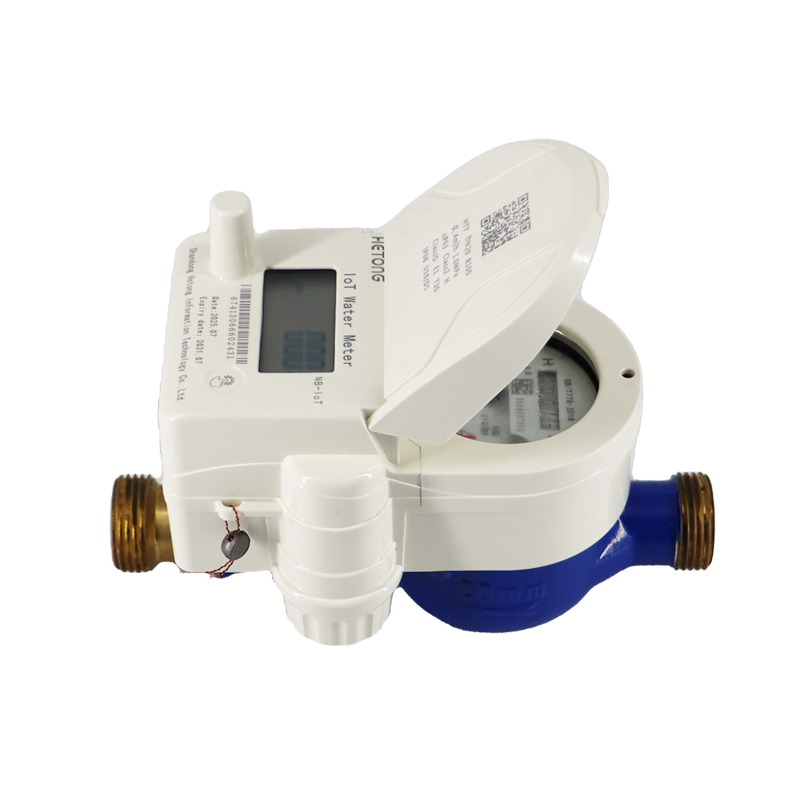
The HETONG IoT Water Meter product information states that the device can retain daily and historical data and describes operation during temporary communication interruptions. The exact retention capacity, interval, and recovery behavior must be confirmed for the configuration selected for a project. These details should be part of procurement and acceptance, not an assumption based on the product family name.
This separation is important for customer confidence. A utility should be able to explain that an absent dashboard point is not necessarily an absent meter reading. At the same time, the utility should not assume that every gap will resolve automatically. A long outage, exhausted power source, damaged antenna, or configuration issue may require a field intervention.
Communication failure has many possible causes. Cellular coverage can change after construction, network maintenance, or an antenna issue. A LoRaWAN endpoint may lose its gateway path because of building changes, gateway power loss, or radio interference. A wired connection can be affected by cable damage, network equipment, addressing, or electrical faults. Device configuration, subscription or service status, and power conditions can also be involved.
The useful operational response is to classify the event before replacing a meter. Is one device missing, a group of nearby devices, or an entire district? Did the meter stop reporting but retain a normal local display? Did the last message include a low-power or signal-quality indication? Did a gateway, network provider, or platform issue occur at the same time? These questions narrow the search quickly.
Observation | Likely investigation area | First practical check |
One meter has stopped reporting | Device, installation, local coverage, or configuration | Check last received status, physical condition, power indication, and local reading |
Multiple nearby meters are missing | Gateway, local coverage, backhaul, or construction change | Review gateway status and compare affected locations |
A large group stops at the same time | Platform, network provider, or scheduled change | Check system alerts, service status, and time synchronization |
Readings return with a delay | Temporary coverage or transmission scheduling | Reconcile timestamps and cumulative values before treating data as missing |
Consumption value is frozen locally and remotely | Metering or power issue rather than communications alone | Follow the device troubleshooting and service procedure |
Local storage gives an IoT water meter a buffer between measuring water and reporting data. Depending on the configuration, the device may retain cumulative consumption, daily totals, interval information, alarm events, configuration status, or a combination of these. When the connection returns, the system may transmit the current cumulative value, historical records, or both.
Utilities should specify what they need to recover. For a billing process, a cumulative reading may be enough to establish total consumption across a period. For leak analysis, a daily or interval profile may be more important because it shows when the pattern changed. For service investigation, event records and signal status may help explain why the connection was lost.
Do not confuse stored data with unlimited memory. Every device has finite capacity and a defined recording method. A project should confirm the maximum expected outage duration, reading interval, data-retention behavior, overwrite policy, and method for downloading or backfilling records. These points should be documented in the operations manual and tested during the pilot stage.
When a connection returns, the system should make it clear whether it has received a current reading, historical records, or an estimated value. Timestamps matter. A record received today may represent consumption that occurred yesterday or last week. The data platform should preserve both the event time and, where applicable, the receipt time so users do not misinterpret delayed data as new use.
Use the meter’s cumulative register as an anchor for reconciliation. If the meter reports a continuous total before and after an outage, the utility can normally determine consumption across the period even if individual interval points were delayed. If granular records were stored and recovered, they can restore the pattern as well. If the outage exceeds storage or the meter did not retain the required intervals, the project’s established estimation and correction process should apply, with a traceable record.
The recovery workflow should prevent duplicate charges or duplicate data. A platform needs rules to identify retransmitted records, compare them with values already received, and preserve the authoritative sequence. Meter identifiers, timestamps, read types, and data-quality flags are more dependable than simply accepting the latest message.
Customers should not be surprised by a delayed bill or a sudden catch-up reading that cannot be explained. Build a policy for communications gaps into the billing process. Define the threshold for an exception, who reviews it, whether a customer is notified, how estimates are labeled, and how a recovered actual reading is reconciled.
For property managers, the same principle applies to submetering. If a resident or tenant portal shows no new data, describe whether the meter is still collecting consumption and when the portal should update. Avoid presenting an estimated value as an actual meter read. Clear labels help users understand the distinction and reduce disputes.
Remote meter reading is valuable because it reduces manual collection and provides quicker visibility, but it should not make a utility dependent on a single communications event. The operation should remain able to identify, investigate, and correct exceptions without losing the continuity of the metering record.
Start with a site survey. Test the intended network technology at representative meter locations, including basements, pits, meter rooms, dense apartment blocks, and rural edge areas where applicable. Plan gateways or repeaters according to the chosen architecture, and account for likely changes in the built environment. Document antenna and enclosure requirements before installation.
Select the communication method for the project rather than following a trend. NB-IoT, LoRaWAN, cellular, M-Bus, RS485, and other approaches have different coverage, power, bandwidth, ownership, and integration characteristics. HETONG describes support for multiple communications options across its IoT water-meter offerings; confirm the specific option and its compatibility with the local platform in writing.
Power planning is equally important. Battery life depends on conditions such as read frequency, transmission frequency, signal quality, temperature, and the selected communications mode. A site that repeatedly retries a weak connection may consume more power than planned. Configure transmission schedules and exception rules to serve the operational need without generating unnecessary traffic.
First, the monitoring platform should flag a missed expected read rather than waiting until a billing cycle fails. The alert should include the last successful message, last known cumulative value, signal or battery information if available, and the affected location. This allows the operator to distinguish a single-device problem from a network-wide event.
Second, check the central systems and communications infrastructure before dispatching a technician. Review platform logs, gateway health, network-service messages, recent configuration changes, and whether nearby devices are affected. If the problem is isolated, examine the asset record and arrange a site visit with the correct access permissions and safety procedures.
Third, at the site, check the meter’s local display or service interface in accordance with the product instructions. Record the cumulative value, status, physical condition, and any accessible alarm information. Do not change configuration or replace hardware before the observations are recorded; the original state can be important to the investigation.
Finally, once reporting resumes, reconcile the data and close the incident with a cause code. The cause-code history helps a utility identify patterns such as recurring coverage weakness, a particular installation practice, or a gateway maintenance issue. It turns isolated outages into useful asset-management information.
Connectivity performance should be reported with the same discipline as consumption data. A monthly operational view can show expected reads, received reads, late reads, unresolved exceptions, recovery time, and the number of field visits associated with communications events. Segment the results by technology, area, installation type, and network path when that helps identify a real pattern. Do not judge a deployment only by the percentage of messages delivered; a small number of repeatedly unreachable critical locations may matter more than a high overall average.
This review also improves vendor and internal coordination. Network operators can compare outage periods with their maintenance records. Installation teams can see whether antenna placement or enclosure details are recurring causes. Customer-service teams can distinguish a portal delay from a billing error. Over time, the utility builds a practical evidence base for where to improve coverage, revise configuration templates, or change field procedures.
An IoT water meter losing network connection is an operational exception, not necessarily a measurement failure. Resilient programs separate consumption measurement from data transmission, specify local storage and recovery behavior, monitor missed reads promptly, and reconcile records carefully when connectivity returns. Shandong Hetong Information Technology Co., Ltd. offers IoT water-meter products with documented connectivity and data-storage features, but each project should verify the selected configuration and build its own outage-response procedure around real site conditions.
Not necessarily. Metering and communications are separate functions. Many IoT water-meter designs continue recording consumption locally during a temporary communications interruption, subject to their product configuration and available power.
It depends on the device’s stored data, outage duration, and recovery process. A cumulative register can often establish total consumption across a gap, while stored interval data may restore additional detail.
Check whether the issue affects one meter, a local group, or a wider network; review the last message and infrastructure status before arranging a field visit.
The device or platform can transmit retained historical records or a current cumulative total, depending on configuration. The platform should preserve timestamps and identify delayed or backfilled reads.
It can. Repeated transmission attempts and poor connectivity may increase energy use, so coverage testing and appropriate reporting schedules are important.
Only under a defined, documented process when actual records are not available. Estimates should be clearly labeled and reconciled when a valid actual reading is recovered.